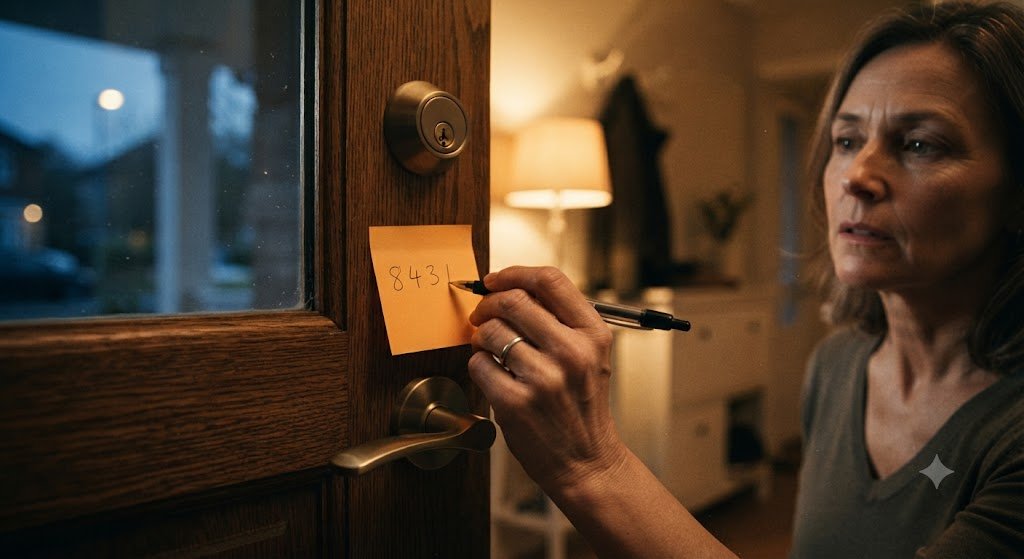



Choosing the right smart lock for your home can feel overwhelming. With dozens of options on the market — keypad locks, fingerprint scanners, Bluetooth models, and Wi-Fi enabled devices — it's easy to get lost in the specs. This guide will walk you through everything you need to consider before making your purchase, so you can protect your home with confidence.
1. Understand Your Door Type
Before anything else, check your door. Not all smart locks are compatible with every door type. Most smart locks are designed for standard single-cylinder deadbolts, which are the most common type found in American homes. If you have a double-cylinder deadbolt, a smart lock with a thumbturn on the interior side won't work.
Measure your door's thickness — most locks work with doors between 1-3/8" and 2" thick. Also check the backset (the distance from the edge of the door to the center of the lock), which is typically either 2-3/8" or 2-3/4". Getting these measurements right before you shop will save you a lot of frustration.
2. Choose Your Connectivity Type
Smart locks connect to your home network in different ways, and each has its pros and cons:
Bluetooth — Works without Wi-Fi. You can control it from your phone when you're nearby (typically within 30 feet). Battery-friendly, but you can't control it remotely.
Wi-Fi — Connects directly to your home network. Allows full remote access from anywhere. Consumes more battery power.
Z-Wave / Zigbee — Requires a compatible smart home hub (like SmartThings or Amazon Echo). Great for home automation enthusiasts.
Thread / Matter — The newest standard. Works with Apple Home, Google Home, and Amazon Alexa without additional hubs.
If you want to check whether you locked the door while you're at the office, you need Wi-Fi or a hub-based system. If you just want a keypad for family members, Bluetooth is perfectly sufficient.
3. Consider the Access Methods
One of the biggest advantages of smart locks is the variety of ways you can unlock your door:
Keypad — Enter a PIN code. Great for guests and service providers without giving out physical keys.
Fingerprint — Biometric access. Fastest and most secure — no codes to remember or share.
Smartphone app — Unlock via Bluetooth or Wi-Fi using your phone.
Key fob — Similar to car keys. Convenient for quick access.
Traditional key — Most smart locks still include a physical key backup, which is important in case of power failure or technical issues.
The best smart locks offer multiple access methods so you're never locked out, no matter what.
4. Check Smart Home Compatibility
If you already have a smart home ecosystem — Amazon Alexa, Google Home, or Apple HomeKit — make sure your new lock is compatible. Nothing is more frustrating than buying a lock that doesn't work with your existing devices.
Look for locks that support voice commands. Being able to say "Hey Google, lock the front door" before going to bed is genuinely useful. Locks with Matter certification are the safest bet for long-term compatibility across platforms.
5. Battery Life and Power Backup
Smart locks run on batteries — typically 4 AA batteries. A good smart lock should last 6 to 12 months on a single set of batteries under normal use. Look for models that send low-battery alerts to your phone before you're left stranded.
Also look for an external power backup. Some locks include a micro-USB or USB-C port on the exterior so you can temporarily power the lock with a power bank if the batteries die completely.
6. Security Ratings and Build Quality
Not all smart locks are created equal in terms of physical security. Look for:
ANSI/BHMA Grade 1 — The highest residential security rating. Required for commercial use.
ANSI/BHMA Grade 2 — Suitable for most residential applications.
UL Listed — Independently tested for safety and performance.
Also consider the material. Solid brass or zinc alloy construction will outlast cheaper plastic alternatives, especially in harsh weather conditions.
7. Auto-Lock and Auto-Unlock Features
Auto-lock automatically secures your door after a set period — say, 30 seconds after it's been closed. This is a lifesaver if you frequently forget to lock up.
Auto-unlock uses geofencing to detect when you're approaching home and unlocks the door as you arrive. It sounds magical — and it is — but make sure the lock's geofencing is accurate enough not to unlock prematurely.
8. Guest Access and Activity Logs
One of the most powerful features of smart locks is the ability to grant temporary access to guests, cleaners, or contractors — without ever handing over a physical key. You can set a unique code that expires after a specific time window.
Activity logs let you see exactly who unlocked the door and when. This is invaluable for families with kids or for managing short-term rentals.
9. Installation Difficulty
Most smart locks are designed as DIY replacements for your existing deadbolt and can be installed in under 30 minutes with a screwdriver. However, some models require professional installation, especially those that replace the entire lockset rather than just the interior mechanism.
DELFA Locks are engineered for straightforward installation — our step-by-step guides walk you through the process so you don't need to call a locksmith.
10. Price vs. Value
Smart locks range from $80 to over $300. The cheapest models often lack remote access or have poor app support. The most expensive aren't always the most reliable.
The sweet spot for most homeowners is in the $150–$250 range, where you get solid build quality, good app integration, and all the essential features without paying for gimmicks.
Final Thoughts
Choosing the right smart lock comes down to understanding your door, your lifestyle, and your smart home setup. Prioritize security ratings, battery life, and access method variety. And always choose a brand that offers reliable customer support — because the lock protecting your home deserves more than a one-star app and a dead support email.
At DELFA Locks, we design every product with these principles in mind. Explore our full range of smart locks and find the perfect fit for your home today.